Russell Means, November 10, 1939 - October 22, 2012.
Showing posts with label obituaries. Show all posts
Monday, October 22, 2012
Friday, May 4, 2012
Me and My Posse and MCA
Posted by
Strath
Beastie Boys "The New Style"
Beastie Boys "Paul Revere" — both from Licensed to Ill (1986, Def Jam) – one of the first rap albums I ever bought (and immediately memorized). It would be difficult to parse out, let alone explain, the level of influence that album has had on me.
Rest In Peace Adam Yauch.
Click for more:
beastie boys,
music,
obituaries
Friday, April 6, 2012
Functionality and Aesthetics
Posted by
Strath
.

Ferdinand A. Porsche, designer of the 911, died yesterday at the age of 76. I'm really not a car person – in general I just don't care that much. But the 911 (and for that matter, the 912), transcend "car." They are some of the most beautifully designed objects ever made.


From Bruce Weber's obituary at the New York Times:

Ferdinand A. Porsche, designer of the 911, died yesterday at the age of 76. I'm really not a car person – in general I just don't care that much. But the 911 (and for that matter, the 912), transcend "car." They are some of the most beautifully designed objects ever made.


From Bruce Weber's obituary at the New York Times:
In 1963 the new model, originally designated the 901, was introduced at an auto show. (The designation was changed to 911 after the company learned that in France, Peugeot had a claim on three-numeral designations of passenger cars with a zero between two digits.) Slightly longer and narrower than the 356, more powerful, with a six-cylinder, rather than a four-cylinder, engine, the original 911 also had more legroom, more rear seat room and bigger doors for easier entrances and exits. Mr. Porsche also modified the body of the 356, rendering the signature sloping back end and extended hood into a sleeker silhouette. It was a remarkably simple design that helped create Mr. Porsche’s reputation as a designer who prized function above all.Read the rest here.
“Design must be functional and functionality must be translated into visual aesthetics, without any reliance on gimmicks that have to be explained,” he said.
Click for more:
cars,
design,
obituaries,
porsche
Saturday, November 5, 2011
Eternal Muse
Posted by
Emily
.


Loulou de la Falaise, May 4, 1948 – November 5, 2011. "A woman of enormous chic who inspired countless others."


Loulou de la Falaise, May 4, 1948 – November 5, 2011. "A woman of enormous chic who inspired countless others."
Click for more:
fashion,
Loulou de la Falaise,
muses,
obituaries,
Yves Saint Laurent
Friday, September 30, 2011
Sylvia Robinson
Posted by
Strath
.
Kind of a controversial figure depending on who you ask, but no one would argue her influence on hip-hop, being the founder of Sugarhill Records. She died yesterday at the age of 75.
Sugarhill Gang "Rapper's Delight" (1979, Sugar Hill 12")
It's not what the song is known for but I could listen to the intro on loop for about three days.
Robinson had a bunch of hits of her own and with the duo Mickey & Sylvia, but to me she's most significant for the labels she founded with her husband Joe and the talent they engendered. Here are a few favorites from All Platinum Records, the label they founded before Sugar Hill.
Willie & the Mighty Magnificents "Funky 8 Corners Pt. 2" (1969, All Platinum 7")
Retta Young "Sending Out and S.O.S." (1975, All Platinum 7"). What can I say, I like those little telegraph beeps.
Wood, Brass & Steel "My Lady" from Wood, Brass & Steel (1976, Turbo Records, a subsidiary of All Platinum). Wood Brass & Steel was basically the backing band for the Sugarhill Gang – before samples the labels would hire bands to play music for MCs to rap over. The double-snare in this song kind of kills me.
I think Sylvia Robinson may have also co-founded Stang Records, which deserves its own post. Read the New York Times' obituary here.
Kind of a controversial figure depending on who you ask, but no one would argue her influence on hip-hop, being the founder of Sugarhill Records. She died yesterday at the age of 75.Sugarhill Gang "Rapper's Delight" (1979, Sugar Hill 12")
It's not what the song is known for but I could listen to the intro on loop for about three days.
Robinson had a bunch of hits of her own and with the duo Mickey & Sylvia, but to me she's most significant for the labels she founded with her husband Joe and the talent they engendered. Here are a few favorites from All Platinum Records, the label they founded before Sugar Hill.
Willie & the Mighty Magnificents "Funky 8 Corners Pt. 2" (1969, All Platinum 7")
Retta Young "Sending Out and S.O.S." (1975, All Platinum 7"). What can I say, I like those little telegraph beeps.
Wood, Brass & Steel "My Lady" from Wood, Brass & Steel (1976, Turbo Records, a subsidiary of All Platinum). Wood Brass & Steel was basically the backing band for the Sugarhill Gang – before samples the labels would hire bands to play music for MCs to rap over. The double-snare in this song kind of kills me.
I think Sylvia Robinson may have also co-founded Stang Records, which deserves its own post. Read the New York Times' obituary here.
Click for more:
music,
obituaries,
records
Saturday, May 28, 2011
Peace Go With You, Brother
Posted by
Strath
.
Gil Scott-Heron died yesterday in New York. My mom introduced his music to me when I was a kid and he has remained one of my favorites since – losing him feels a little like losing a family member. Here are just a few choice cuts:

Gil Scott-Heron "Your Daddy Loves You" from Winter In America (1974, Strata-East)
Gil Scott-Heron & Brian Jackson "The Bottle" from Winter In America (1974, Strata-East)
Gil Scott-Heron & Brian Jackson "Winter In America" from Winter In America (1974, Strata-East)

Gil Scott-Heron "We Beg Your Pardon (Pardon Our Analysis)" from Midnight Band: The First Minute of a New Day (Arista, 1975)
Esther Phillips "Home Is Where the Hatred Is," written by Gil Scott-Heron, from From A Whisper To a Scream (Kudu, 1971). His version appeared on Pieces of a Man (Flying Dutchman, 1971)

Gil Scott-Heron & Brian Jackson: "Offerings" from Midnight Band: The First Minute of a New Day (Arista, 1975)
Listen to a good remembrance of Gil Scott-Heron at NPR.
Gil Scott-Heron died yesterday in New York. My mom introduced his music to me when I was a kid and he has remained one of my favorites since – losing him feels a little like losing a family member. Here are just a few choice cuts:

Gil Scott-Heron "Your Daddy Loves You" from Winter In America (1974, Strata-East)
Gil Scott-Heron & Brian Jackson "The Bottle" from Winter In America (1974, Strata-East)
Gil Scott-Heron & Brian Jackson "Winter In America" from Winter In America (1974, Strata-East)

Gil Scott-Heron "We Beg Your Pardon (Pardon Our Analysis)" from Midnight Band: The First Minute of a New Day (Arista, 1975)
Esther Phillips "Home Is Where the Hatred Is," written by Gil Scott-Heron, from From A Whisper To a Scream (Kudu, 1971). His version appeared on Pieces of a Man (Flying Dutchman, 1971)

Gil Scott-Heron & Brian Jackson: "Offerings" from Midnight Band: The First Minute of a New Day (Arista, 1975)
Listen to a good remembrance of Gil Scott-Heron at NPR.
Click for more:
gil scott-heron,
music,
obituaries
Wednesday, April 27, 2011
Street Peeper
Posted by
Strath
.
Miroslav Tichý, the Czech photographer whom I posted about last year when he had a major retrospective at the International Center of Photography in New York, died earlier this month at the age of 84.
With his homemade "trash cameras" and voyeuristic photographs of women on the street, I thought of Tichý as a sort of harmlessly lecherous, Eastern-block version of Bill Cunningham.
Click here to read a remembrance from Saatchi Online.
(via Izzie)
Miroslav Tichý, the Czech photographer whom I posted about last year when he had a major retrospective at the International Center of Photography in New York, died earlier this month at the age of 84.
With his homemade "trash cameras" and voyeuristic photographs of women on the street, I thought of Tichý as a sort of harmlessly lecherous, Eastern-block version of Bill Cunningham.
Click here to read a remembrance from Saatchi Online.
(via Izzie)
Click for more:
miroslav tichy,
obituaries,
photography
Monday, April 11, 2011
Character
Posted by
Strath
.
Sidney Lumet, 1924–2011 (photo by Sam Falk/NYT, 1967)
A.O. Scott on Dog Day Afternoon (1975)
Serpico (1973)
Before the Devil Knows You're Dead (2007)
Sidney Lumet, 1924–2011 (photo by Sam Falk/NYT, 1967)A.O. Scott on Dog Day Afternoon (1975)
Serpico (1973)
Before the Devil Knows You're Dead (2007)
Click for more:
film,
obituaries,
video
Wednesday, March 30, 2011
Closed Form
Posted by
Strath
.
Toshiko Takaezu (1922–2011) with some of her "closed form" works.
Via nytimes.com:
Toshiko Takaezu (1922–2011) with some of her "closed form" works.Via nytimes.com:
Early in her career [Takaezu] made traditional vessels but in the late 1950s, strongly influenced by the Finnish ceramist Maija Grotell, she embraced the notion of ceramic pieces as artworks meant to be seen rather than used. She closed off the top of her vessels, leaving a vestigial nipple-like opening and creating, in effect, a clay canvas for glazing of all kinds: brushing, dripping, pouring and dipping.(More here.) Here's a 2010 interview with Takaezu in her home/studio:
She became known for the squat balls she called moon pots; the vertical “closed forms,” which grew sharply in height in the 1990s; and thin ceramic trunks inspired by the scorched trees she had seen along the Devastation Trail in Hawaii’s Volcanoes National Park. At times Ms. Takaezu exhibited the moon pots in hammocks, an allusion to her method of drying the pots in nets. She also cast bronze bells and wove rugs.
Strongly influenced by her study of Zen Buddhism, she regarded her ceramic work as an outgrowth of nature and seamlessly interconnected with the rest of her life. “I see no difference between making pots, cooking and growing vegetables,” she was fond of saying. Indeed, she often used her kilns to bake chicken in clay, and dry mushrooms, apples and zucchinis.
Click for more:
art,
ceramic,
obituaries,
sculpture
Wednesday, March 23, 2011
Friday, February 4, 2011
What Are You Running Away From
Posted by
Strath
Click for more:
film,
maria schneider,
MIchelangelo Antonioni,
obituaries
Thursday, February 3, 2011
The Ant Farm
Posted by
Strath
.
Reason no. 86,078 to read the Obituaries section of the New York Times:
Milton M. Levine, 97, inventor of the Ant Farm. I always wanted one of those things and never got one. Someone had to invent that idea for it to exist and his name was Milt Levine.
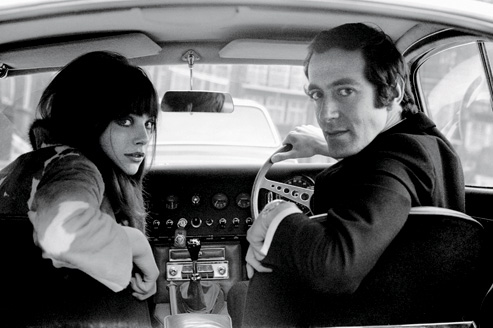
The thing I like about reading the obituaries, and I know I've said this before, is that you get to read about ordinary people who in the course of their lives did extraordinary things – or even just one extraordinary thing. But maybe they also had a crummy childhood, went to war, figured some stuff out, moved around, worked a bunch of places, had some kids, failed, succeeded. It's interesting to read about people's whole lives – regular or famous – after they're over.
Reason no. 99,123: John Barry, who died last week at the age of 77. The dude composed the music for (among many others) Midnight Cowboy, Body Heat, and all the James Bond films until they started sucking. Before that he was married to Jane Birkin.
Anyway I think it's pretty fascinating to look back on a person's entire life, almost no matter who the person is. If you don't think that's morbid you can read more obituaries here. Also interesting is a 2008 interview with obituary writer Bruce Weber.
Reason no. 86,078 to read the Obituaries section of the New York Times:
The thing I like about reading the obituaries, and I know I've said this before, is that you get to read about ordinary people who in the course of their lives did extraordinary things – or even just one extraordinary thing. But maybe they also had a crummy childhood, went to war, figured some stuff out, moved around, worked a bunch of places, had some kids, failed, succeeded. It's interesting to read about people's whole lives – regular or famous – after they're over.
Reason no. 99,123: John Barry, who died last week at the age of 77. The dude composed the music for (among many others) Midnight Cowboy, Body Heat, and all the James Bond films until they started sucking. Before that he was married to Jane Birkin.
Anyway I think it's pretty fascinating to look back on a person's entire life, almost no matter who the person is. If you don't think that's morbid you can read more obituaries here. Also interesting is a 2008 interview with obituary writer Bruce Weber.
Click for more:
film,
jane birkin,
john barry,
music,
obituaries,
soundtracks
Wednesday, January 19, 2011
Optometry
Posted by
Strath
.
Photographer Milton Rogovin, a former optometrist who documented the lives of poor and working class people in his hometown of Buffalo, as well as in Appalachia and elsewhere, has died of natural causes at the age of 101. See an audio slideshow narrated by Rogovin and read his obituary at the New York Times. “All my life I’ve focused on the poor,” he said in 2003. “The rich ones have their own photographers.”
Click for more:
buffalo,
Milton Rogovin,
obituaries,
photography
Friday, January 7, 2011
How to Find the Law
Posted by
Emily
.
Morris Cohen in 1971,
in the University of Pennsylvania law library.
Photo by Israel Shenker for the New York Times.
I try not to talk about my day job as a law librarian much on this blog, because, well, that's not what this blog is about. But - and in spite of the abundance of obits around here lately - I feel like I'd be remiss in not taking note of the recent passing of one of the profession's great lights: Morris Cohen, former director of the law libraries at Yale, Harvard, Penn and the University of Buffalo (now SUNY), and at the time of his death a professor emeritus at Yale law school. Morris is one of those people about whom anything that is said risks coming off as an understatement, inadequate, and fundamentally unworthy - especially by someone as young in the profession as I am. (I never met Morris but I feel like I can call him by his first name because I almost have the sense that I know him at this point, and because . . . well, just look at the man.) Suffice it to say that he is pretty much the Godfather of modern law librarianship, and clearly beloved by everyone who had the privilege of making his acquaintance.
The title of this post is also the name of one of the many texts he authored, and the one that I first cracked when I started my advanced legal research class in law school almost 10 years ago to this day. Its definitive tone pretty much sums up what an unquestionable lion of the profession he was. To the law library community this is something like the passing of Ted Kennedy, Johnny Cash, and Picasso all rolled into one. Rest in peace, Morris. There's no danger you'll be forgotten.
The obit from the New York Times (which also published an editorial tribute to Morris Cohen today) is here. My favorite part is the concluding paragraph:
Morris Cohen in 1971,in the University of Pennsylvania law library.
Photo by Israel Shenker for the New York Times.
I try not to talk about my day job as a law librarian much on this blog, because, well, that's not what this blog is about. But - and in spite of the abundance of obits around here lately - I feel like I'd be remiss in not taking note of the recent passing of one of the profession's great lights: Morris Cohen, former director of the law libraries at Yale, Harvard, Penn and the University of Buffalo (now SUNY), and at the time of his death a professor emeritus at Yale law school. Morris is one of those people about whom anything that is said risks coming off as an understatement, inadequate, and fundamentally unworthy - especially by someone as young in the profession as I am. (I never met Morris but I feel like I can call him by his first name because I almost have the sense that I know him at this point, and because . . . well, just look at the man.) Suffice it to say that he is pretty much the Godfather of modern law librarianship, and clearly beloved by everyone who had the privilege of making his acquaintance.
The title of this post is also the name of one of the many texts he authored, and the one that I first cracked when I started my advanced legal research class in law school almost 10 years ago to this day. Its definitive tone pretty much sums up what an unquestionable lion of the profession he was. To the law library community this is something like the passing of Ted Kennedy, Johnny Cash, and Picasso all rolled into one. Rest in peace, Morris. There's no danger you'll be forgotten.The obit from the New York Times (which also published an editorial tribute to Morris Cohen today) is here. My favorite part is the concluding paragraph:
As evidenced in his research, Professor Cohen had a penchant for the quaint and the quirky. At the University of Pennsylvania, where he taught legal bibliography from 1963 to 1971, a student once typed her term paper on onion skin and squeezed it into a walnut shell. He gave her an A.
Click for more:
law,
librarians,
Morris Cohen,
obituaries
Wednesday, January 5, 2011
You're Going Home
Posted by
Strath
.
Gerry Rafferty "Baker Street" from City to City (United Artists, 1978)
Scottish singer/songwriter Gerry Rafferty passed away yesterday at the age of 63. I can't say I was the hugest fan, just in that I'm not that familiar with most of his work, but he holds a special place in my heart. When I was a kid, my dad, who is a woodworker, had his first shop in Totem Lake. Sometimes when he went there on the weekends my brother and I would get to go with him – we'd ride our bikes around the industrial park and there was a little stream that ran parallel with the driveway (possibly just slightly polluted) that we'd mess around in, before they fenced it off. A Husqvarna dealership was on the opposite end of the building, and being obsessed with BMX, we thought those dudes were scary and cool. In the shop next door to my dad's, his friend Rex was building a 39-foot sailboat by hand. If it was raining and we couldn't ride bikes, we'd go inside and nail wood together.
On the way back home we would often split a can of 7-Up (or Country Time, or Green River, if my brother and I had our way) and listen to KJR or KZAM. When the song "Baker Street" would come on I remember we all really loved it, and at some point this love reached critical mass and we went to the record store (I think maybe Budget Tapes & Records in Bellevue) and picked up the album.
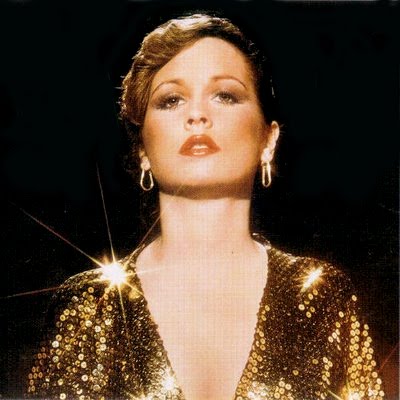
I still have that record, and I'm probably biased, but I think it holds up pretty well today.
Gerry Rafferty "Baker Street" from City to City (United Artists, 1978)
Scottish singer/songwriter Gerry Rafferty passed away yesterday at the age of 63. I can't say I was the hugest fan, just in that I'm not that familiar with most of his work, but he holds a special place in my heart. When I was a kid, my dad, who is a woodworker, had his first shop in Totem Lake. Sometimes when he went there on the weekends my brother and I would get to go with him – we'd ride our bikes around the industrial park and there was a little stream that ran parallel with the driveway (possibly just slightly polluted) that we'd mess around in, before they fenced it off. A Husqvarna dealership was on the opposite end of the building, and being obsessed with BMX, we thought those dudes were scary and cool. In the shop next door to my dad's, his friend Rex was building a 39-foot sailboat by hand. If it was raining and we couldn't ride bikes, we'd go inside and nail wood together.
On the way back home we would often split a can of 7-Up (or Country Time, or Green River, if my brother and I had our way) and listen to KJR or KZAM. When the song "Baker Street" would come on I remember we all really loved it, and at some point this love reached critical mass and we went to the record store (I think maybe Budget Tapes & Records in Bellevue) and picked up the album.I still have that record, and I'm probably biased, but I think it holds up pretty well today.
Click for more:
drinks,
music,
obituaries,
video
Monday, December 27, 2010
Rest In Peace, Lady T
Posted by
Strath
.
Teena Marie "Square Biz" from It Must Be Magic (Motown/Gordy, 1981)
The New York Times is reporting that the Ivory Queen of Soul, Teena Marie, has passed away at the age of 54.
Teena Marie "Square Biz" from It Must Be Magic (Motown/Gordy, 1981)
The New York Times is reporting that the Ivory Queen of Soul, Teena Marie, has passed away at the age of 54.
The R&B legend revered and fully immersed herself in black culture — and in turn was respected and adored by black audiences, not only for her immense soulful talents, but for her inner soul as well. "Overall my race hasn't been a problem. I'm a Black artist with White skin. At the end of the day you have to sing what's in your own soul."Read more about the great Teena Marie at nytimes.com.
Click for more:
music,
obituaries
Thursday, December 16, 2010
Variety
Posted by
Strath
.
Filmmaker Blake Edwards, who died last night at the age of 88, directed a ton of movies – some classic and some fairly forgettable, but all (at least all that I've seen) redeeming in some way. Here's the trailer for one of the best:
Breakfast At Tiffany's (1961)
And here's the final clip from S.O.B., a less-classic but nonetheless enjoyable and funny Edwards film starring his wife Julie Andrews, along with a bunch of other recognizable people (including – fashion trivia alert! – Marisa Berenson).
S.O.B. (1981)
I think a Blake Edwards film festival is definitely in order.
Click here to read film critic A.O. Scott's remembrance at The New York Times.
Filmmaker Blake Edwards, who died last night at the age of 88, directed a ton of movies – some classic and some fairly forgettable, but all (at least all that I've seen) redeeming in some way. Here's the trailer for one of the best:Breakfast At Tiffany's (1961)
And here's the final clip from S.O.B., a less-classic but nonetheless enjoyable and funny Edwards film starring his wife Julie Andrews, along with a bunch of other recognizable people (including – fashion trivia alert! – Marisa Berenson).
S.O.B. (1981)
I think a Blake Edwards film festival is definitely in order.
Click here to read film critic A.O. Scott's remembrance at The New York Times.
Click for more:
film,
obituaries,
video
Thursday, October 28, 2010
Aim High
Posted by
Strath
.
Sadamitsu Neil Fujita, who designed the iconic original book covers for Truman Capote's In Cold Blood and Mario Puzo's The Godfather, among others, as well as classic album covers while in the position of art director for CBS Records during the formative years of modern jazz, died last weekend at the age of 89. In addition to being a distinguished designer, Fujita made it through the internment camps and enlisted in the 442nd Regimental Combat Team, which consisted almost entirely of Japanese-American volunteers and became the most highly decorated unit of World War II.
Read more about S. Neil Fujita's extraordinary life in William Grimes' obituary at the New York Times; Steven Heller wrote an essay for Design Observer earlier this year on Fujita and his book Aim For A Job In Graphic Design/Art which also serves as a fitting remembrance of this relatively unknown but truly great designer.
Sadamitsu Neil Fujita, who designed the iconic original book covers for Truman Capote's In Cold Blood and Mario Puzo's The Godfather, among others, as well as classic album covers while in the position of art director for CBS Records during the formative years of modern jazz, died last weekend at the age of 89. In addition to being a distinguished designer, Fujita made it through the internment camps and enlisted in the 442nd Regimental Combat Team, which consisted almost entirely of Japanese-American volunteers and became the most highly decorated unit of World War II.
Read more about S. Neil Fujita's extraordinary life in William Grimes' obituary at the New York Times; Steven Heller wrote an essay for Design Observer earlier this year on Fujita and his book Aim For A Job In Graphic Design/Art which also serves as a fitting remembrance of this relatively unknown but truly great designer.
Click for more:
books,
design,
obituaries,
S neil fujita,
steven heller
Thursday, October 21, 2010
High Smut
Posted by
Strath
.
Bob Guccione, the founder of Penthouse magazine, has died at age 79 after a long bout with cancer.
Penthouse was founded in the late '60s as a racier answer to Playboy. Guccione shot most of the early cover stories himself.
It got more and more hardcore as time went on but the design of the early issues is pretty classic. Back then, magazines like Playboy, Penthouse, and Oui were winning design awards for their bold layouts and typography – and photography that, while pornographic, was often also beautifully composed.
I posted previously about Viva, Guccione's legendary short-lived adult mag for women, for which Anna Wintour was once fashion editor.
Guccione founded Omni magazine as well, which I think we subscribed to when I was about 9 years old.
Guccione also had a 17,000 square-foot mansion in NY (some say the largest in the city) which we did a story about in V magazine several years ago. Not bad for a former dry cleaner. Say what you will about the guy, but he created his own world and lived in it – I don't think I'd want to hang out with him all the time, but he was definitely noteworthy. Click here to read Guccione's obituary at the New York Times.
Bob Guccione, the founder of Penthouse magazine, has died at age 79 after a long bout with cancer.
Penthouse was founded in the late '60s as a racier answer to Playboy. Guccione shot most of the early cover stories himself.
It got more and more hardcore as time went on but the design of the early issues is pretty classic. Back then, magazines like Playboy, Penthouse, and Oui were winning design awards for their bold layouts and typography – and photography that, while pornographic, was often also beautifully composed.
I posted previously about Viva, Guccione's legendary short-lived adult mag for women, for which Anna Wintour was once fashion editor.
Guccione founded Omni magazine as well, which I think we subscribed to when I was about 9 years old.Guccione also had a 17,000 square-foot mansion in NY (some say the largest in the city) which we did a story about in V magazine several years ago. Not bad for a former dry cleaner. Say what you will about the guy, but he created his own world and lived in it – I don't think I'd want to hang out with him all the time, but he was definitely noteworthy. Click here to read Guccione's obituary at the New York Times.
Click for more:
harry benson,
magazines,
obituaries,
photography
Wednesday, June 30, 2010
Rock On
Posted by
Strath
.
Rammellzee + K-Rob "Beat Bop"
(produced by Jean-Michel Basquiat)
Rest In Peace Rammellzee, 1960–2010
[ via LineOut / see also Randy Kennedy at Arts Beat / image via Cocaine Blunts ]

Rammellzee + K-Rob "Beat Bop"
(produced by Jean-Michel Basquiat)
Rest In Peace Rammellzee, 1960–2010
[ via LineOut / see also Randy Kennedy at Arts Beat / image via Cocaine Blunts ]
Click for more:
art,
graffiti,
jean-michel basquiat,
music,
obituaries
Subscribe to:
Posts (Atom)


