
 Irving Penn: Lisa Fonssagrives-Penn in Balenciaga, 1950, featured in the book Nostalgia In Vogue (Rizzoli) – written by Eve MacSweeney, with a foreword by Anna Wintour and contributions from Joan Didion, Anjelica Huston, Margaret Atwood, Patti Smith, and others.
Friday, January 6, 2012
Image of the Day
.
 Irving Penn: Lisa Fonssagrives-Penn in Balenciaga, 1950, featured in the book Nostalgia In Vogue (Rizzoli) – written by Eve MacSweeney, with a foreword by Anna Wintour and contributions from Joan Didion, Anjelica Huston, Margaret Atwood, Patti Smith, and others.


Thursday, January 5, 2012
Last December
.

TV on the Radio "Blind"
from Young Liars EP (2003, Touch & Go)
(photo: 1937 Haida Totem Pole, Lake Washington, 12/31/11)

TV on the Radio "Blind"
from Young Liars EP (2003, Touch & Go)
(photo: 1937 Haida Totem Pole, Lake Washington, 12/31/11)


Wednesday, January 4, 2012
Image of the Day
.  Imogen Cunningham: Veiled Woman, 1910 – featured in the recent book by photography collector W.M. Hunt, The Unseen Eye: Photographs from the Unconscious (Aperture). Each image in the book features a subject with gaze averted, face obscured or eyes closed.
 Imogen Cunningham: Veiled Woman, 1910 – featured in the recent book by photography collector W.M. Hunt, The Unseen Eye: Photographs from the Unconscious (Aperture). Each image in the book features a subject with gaze averted, face obscured or eyes closed.
Tuesday, January 3, 2012
Developing A Vocabulary
.
Long but worth watching.
Every time I decide I'm tired of Tom Ford – I think it's the way he talks, he can seem so full of himself – I experience something new he's produced, and I come back around.
Long but worth watching.
Every time I decide I'm tired of Tom Ford – I think it's the way he talks, he can seem so full of himself – I experience something new he's produced, and I come back around.
Image of the Day
.
 Eva Zeisel, ca.1930, with some of her designs. In 1946 Zeisel was the subject of the Museum of Modern Art's first solo exhibition by a woman, and she continued working until she died last week at the age of 105. Read about Eva Zeisel's almost impossibly great life at nytimes.com.
 Eva Zeisel, ca.1930, with some of her designs. In 1946 Zeisel was the subject of the Museum of Modern Art's first solo exhibition by a woman, and she continued working until she died last week at the age of 105. Read about Eva Zeisel's almost impossibly great life at nytimes.com.
Monday, January 2, 2012
HAIR
 Magdalena Frackowiak photographed by Ben Hassett for Vogue Germany (hair by Sam McKnight, styling by Beth Fenton, make-up by Polly Osmond).


Totally amazing to me. See the full story here.

(via Fashion Gone Rogue)
Friday, December 30, 2011
Thursday, December 29, 2011


Doe Avedon
.
 Photograph by Richard Avedon at the Gare du Nord, Paris, August 1947. Doe Avedon, model and actress, and the inspiration – along with Richard Avedon, her first husband – for the movie Funny Face, died last week at the age of 86.
In 1949 Doe divorced Richard Avedon to marry Dan Matthews, an actor. “I would have crawled to the Bronx on my knees to bring Doe back,” Mr. Avedon said in 1993.
Book photo above from the excellent must-have Avedon Fashion 1944–2000.
 Photograph by Richard Avedon at the Gare du Nord, Paris, August 1947. Doe Avedon, model and actress, and the inspiration – along with Richard Avedon, her first husband – for the movie Funny Face, died last week at the age of 86.
Funny Face trailer
In 1949 Doe divorced Richard Avedon to marry Dan Matthews, an actor. “I would have crawled to the Bronx on my knees to bring Doe back,” Mr. Avedon said in 1993.
Book photo above from the excellent must-have Avedon Fashion 1944–2000.
Wednesday, December 28, 2011
Image of the Day
. 
A preview from the Akris SS 2012 campaign – the model is Daga Ziober but I'm not sure who shot it... maybe Steven Klein? Minimal and beautiful and I love the white space around the image.

A preview from the Akris SS 2012 campaign – the model is Daga Ziober but I'm not sure who shot it... maybe Steven Klein? Minimal and beautiful and I love the white space around the image.
Tuesday, December 27, 2011
Image of the Day
.
 Frederick Eversley: Big Red Lens, c.1985, on view at the Crystal Bridges Museum of American Art in Bentonville, Arkansas, which was financed and recently opened by Alice Walton, heir to the Wal-Mart fortune. Roberta Smith writes in the Times that "much more than just a demonstration of what money can buy or an attempt to burnish a rich family’s name, Crystal Bridges is poised to make a genuine cultural contribution, and possibly to become a place of pilgrimage for art lovers from around the world." (Read the rest of her profile and see a slideshow here.) Roadtrip to Arkansas, anyone?
 Frederick Eversley: Big Red Lens, c.1985, on view at the Crystal Bridges Museum of American Art in Bentonville, Arkansas, which was financed and recently opened by Alice Walton, heir to the Wal-Mart fortune. Roberta Smith writes in the Times that "much more than just a demonstration of what money can buy or an attempt to burnish a rich family’s name, Crystal Bridges is poised to make a genuine cultural contribution, and possibly to become a place of pilgrimage for art lovers from around the world." (Read the rest of her profile and see a slideshow here.) Roadtrip to Arkansas, anyone?
Photo: Steve Hebert/NYT
This is 2011
.
I had a chance to watch Mike Mills' most recent film Beginners on DVD over the weekend – the best movie I've seen this year.
I had a chance to watch Mike Mills' most recent film Beginners on DVD over the weekend – the best movie I've seen this year.
Monday, December 26, 2011
Trying To Let It Go
.
Octo Octa "I'm Trying" from the "Let Me See You" 12"
(2011, 100% Silk). Video by Christopher Cote.

Octo Octa "I'm Trying" from the "Let Me See You" 12"
(2011, 100% Silk). Video by Christopher Cote.

Free downloads here.
Image of the Day
.
 I love the shadow and light in this Deborah Turville photograph, of models Zuzanna Bijoch, Maud Welzen, Bette Franke, and Fei Fei Sun, for an upcoming Valentino campaign.
 I love the shadow and light in this Deborah Turville photograph, of models Zuzanna Bijoch, Maud Welzen, Bette Franke, and Fei Fei Sun, for an upcoming Valentino campaign.
Sunday, December 25, 2011
Merry Christmas
.

Parenthetical Girls "Festive Friends Forever"
from A Parenthetical Girls Family Christmas
(2006, Slender Means Society)
(photo: Seattle WA December 2011)

Parenthetical Girls "Festive Friends Forever"
from A Parenthetical Girls Family Christmas
(2006, Slender Means Society)
(photo: Seattle WA December 2011)
Friday, December 23, 2011
Off the Shelf
.
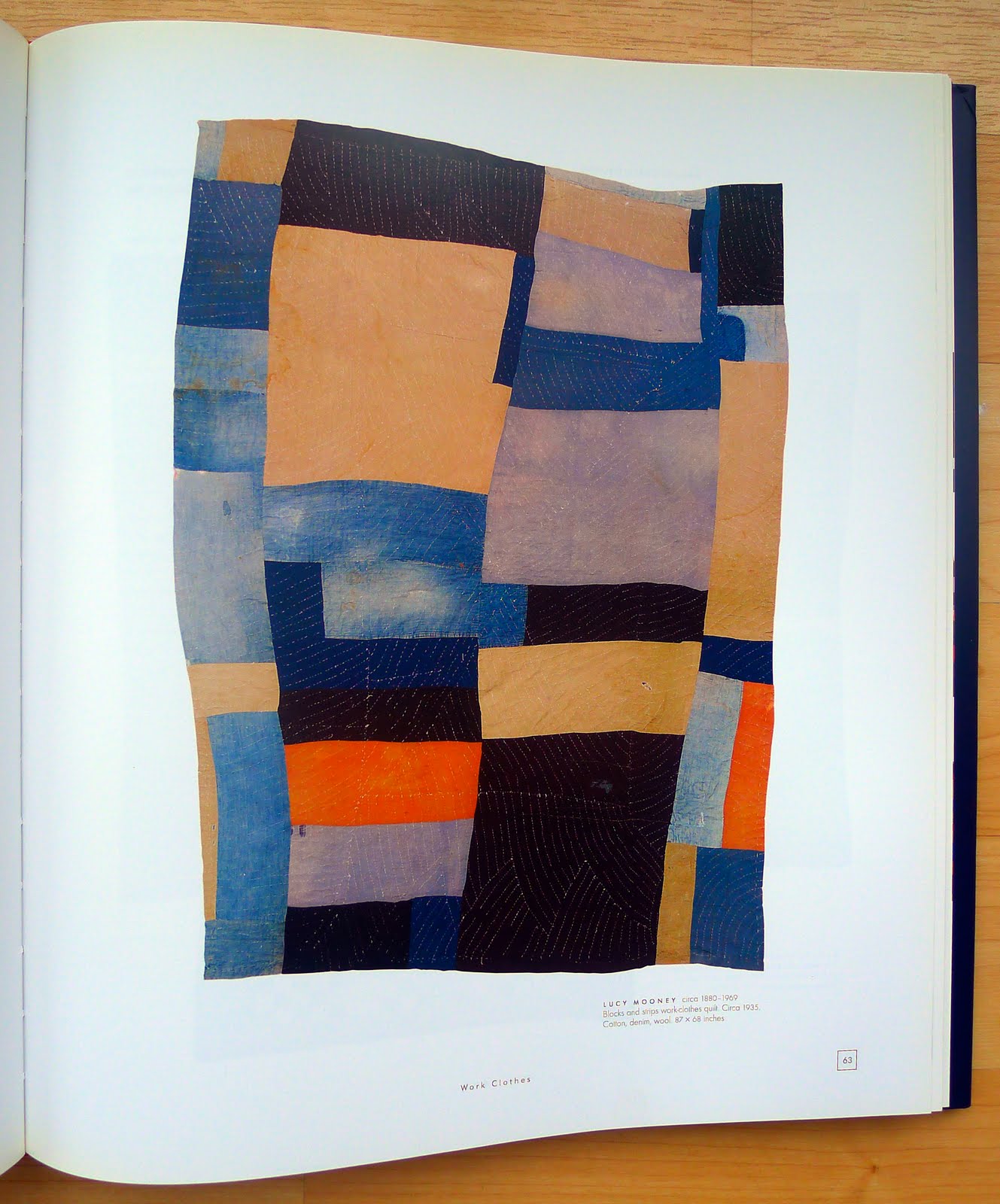
Continuing with the abstraction theme this week, The Quilts of Gee's Bend (Tinwood Books, 2002; monograph for exhibition of the same name).


We saw this exhibit when it traveled to the Whitney from the Museum of Fine Arts in Houston, and it was pretty fantastic. The older quilts radiated a beautiful sense of time and experience, and the color or the boldness of the lines in others made you feel like you could be looking at a Motherwell or a Rothko. It's strange then to realize that in just about every way the intent behind the work and the lives of the women who made – and continue to make – these quilts could not be further removed from anything going on in the mainstream art world.
Art lives everywhere.
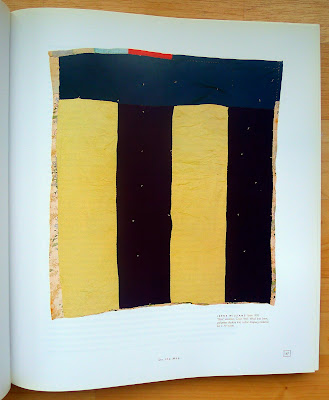


Continuing with the abstraction theme this week, The Quilts of Gee's Bend (Tinwood Books, 2002; monograph for exhibition of the same name).


We saw this exhibit when it traveled to the Whitney from the Museum of Fine Arts in Houston, and it was pretty fantastic. The older quilts radiated a beautiful sense of time and experience, and the color or the boldness of the lines in others made you feel like you could be looking at a Motherwell or a Rothko. It's strange then to realize that in just about every way the intent behind the work and the lives of the women who made – and continue to make – these quilts could not be further removed from anything going on in the mainstream art world.
Art lives everywhere.

(I am in a rush to leave town for the holiday, so I will have to
insert captions and credits later...apologies to the artists!)
insert captions and credits later...apologies to the artists!)


"Gee's Bend" in its narrowest usage describes a geographical feature: one of several "bends" where the Alabama River makes an abrupt, looping turn. More broadly, Gee's Bend is the traditional but unofficial name of a small African American community centered at the town of Boykin and encircled by the river. -- Alvia Wardlaw (from the Introduction)

What nature created at the Bend, history has reinforced. Its people were all but forgotten after emancipation, subsisting from generation to generation as sharecroppers and tenant farmers for absentee white landlords....Isolation has spawned a mythology unique to Gee's Bend. Well into the twentieth century, the settlement was regarded as a throwback: an antebellum artifact, even an Alabama Africa. -- John Beardsley (from the essay "River Island")


The quilts are products of the brilliant originality that lived through the dark eras of slavery and Reconstruction. ...The [quiltmakers] are descended from generations of slaves who worked the Pettway plantation at Gee's Bend. The ancestors of these artists were so firmly rooted in that place that they stayed put on that peninsula in Alabama after the Civil War and established a tightly knit community that during the Great Depression was declared one of the poorest place in the United States and singled out for federal relief programs. -- Peter Marzio, Director, The Museum of Fine Arts, Houston (from the Preface)


Studying the quilts of this small community called Gee's Bend, one quickly realizes that they embody a strangely independent, or self-referring, aesthetic. To a certain audience, they may reverberate with the rhythms and patterns of other twentieth-century art, whether the German Bauhaus-inspired work of Josef Albers or Paul Klee, some of Barnett Newman's compositions, or more contemporary painters such as Sean Scully. Yet these parallels quickly seem irrelevant. To claim too much "originality" would be pointless – and yet it is equally fruitless to attempt to establish actual influences from other art...Our fascination with these quilts lies in part in the impact they have on modern "high art," yet the quiltmakers of Gee's Bend cannot be shown to be directly, or for that matter indirectly affected by the mainstream art world. -- Jane Livingston (from the essay "Reflections on the Art of Gee's Bend")


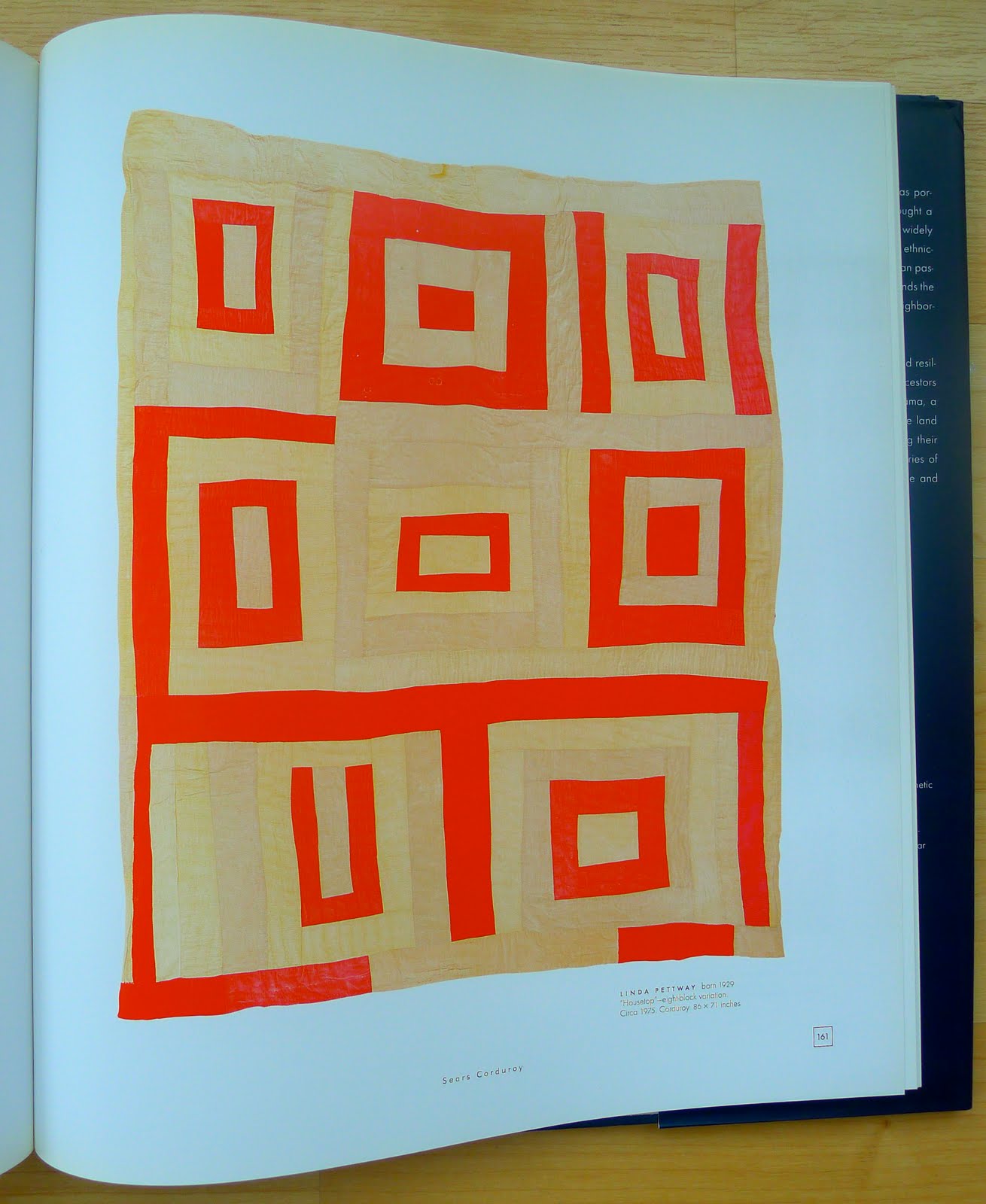
[T]he Gee's Bend aesthetic . . . is as inventive as the town's social history is intricate. . . . [A] totally unselfconscious approach to the act of making art prevails …. This is an aesthetic of the here and now. An unabashed immediacy permits the women to make snap decisions about a quilt and move on, sharing their decision-making with us. Theirs is an aesthetic of contemplation, but not hesitancy. The results are large-scale geometric permutations of pure color and form-bars and bands of color offered up in bold confidence, intricate triangles playing visual eye games.... -- Alvia Wardlaw (from the Introduction)


Working with "useless" bits of cloth, these artists seem to follow linear patterns–a classical path to beauty. But they also show a profound color sense that is as refined as that of any professional artist. The women know one another's styles as confidently as Jackson Pollock knew his as compared to Willem de Kooning. These women learn from one another but strive to be themselves. Their quilts are both the signatures of individuals and the banners of a community. -- Peter Marzio, Director, The Museum of Fine Arts, Houston (from the Preface)


Subscribe to:
Posts (Atom)

